How Urbanization is Changing the Face of Kathmandu’s Architecture
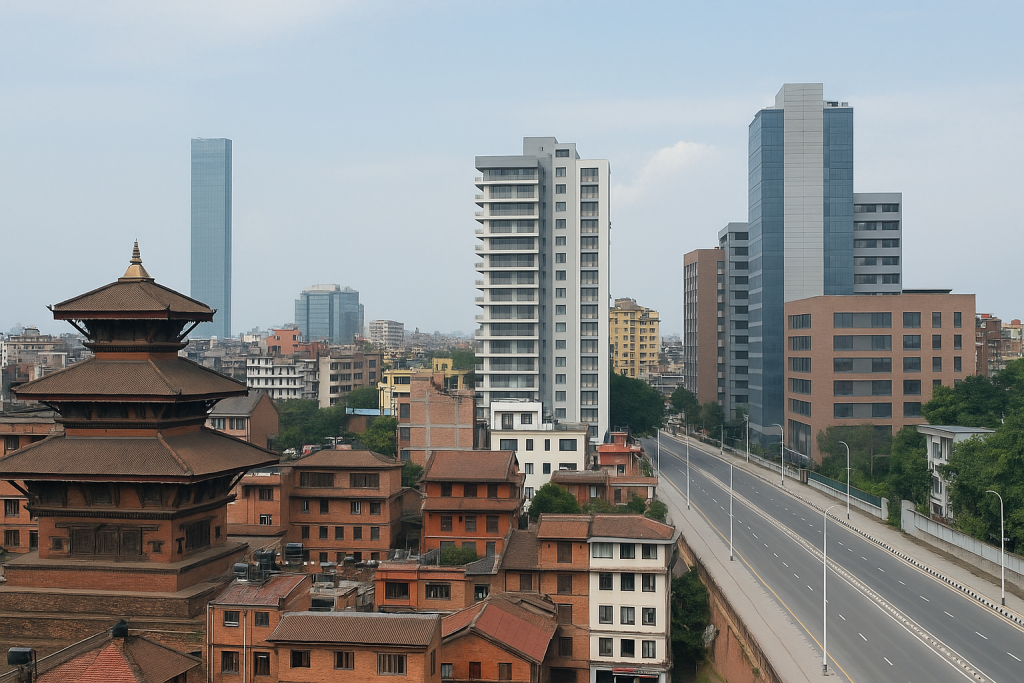
Kathmandu, the cultural and political heart of Nepal, has been undergoing a dramatic transformation. As urbanization accelerates, the city’s architectural landscape is evolving rapidly. Traditional homes and historic neighborhoods are now sharing space with modern apartment complexes, high-rises, and commercial hubs. This shift isn’t just about aesthetics — it reflects deeper changes in lifestyle, economy, and urban planning.
At Skyroof Engineering Groups Pvt. Ltd., we’ve had a front-row seat to these developments. Let’s explore how urbanization in Kathmandu is reshaping architecture and what it means for the future of construction in Nepal.
1. The Shift from Traditional to Modern Architecture
One of the most visible effects of urbanization in Kathmandu is the move away from traditional Newari and vernacular architecture toward contemporary styles. Centuries-old homes with intricate wooden carvings, sloped tiled roofs, and courtyards are being replaced by concrete buildings and steel-framed structures.
While modernization offers improved safety and utility, it also raises concerns about preserving Kathmandu’s rich architectural heritage. Striking the right balance between the past and the future is a key challenge for the construction industry in Nepal.
2. Vertical Expansion: Building Upward Instead of Outward
With limited land and a growing population, vertical construction has become a necessity. Urbanization in Kathmandu has led to a boom in multi-story apartments, office buildings, and mixed-use towers. This trend is especially prominent in core areas like New Baneshwor, Kalanki, and Koteshwor, where land is scarce and expensive.
This shift is not only changing the city’s skyline but also redefining how people live and work. High-rises now offer everything from rooftop gardens to smart home automation — hallmarks of modern Kathmandu construction.
3. Growing Demand for Smart and Sustainable Buildings
Modern homeowners and developers in Kathmandu are increasingly looking for smart, energy-efficient buildings. As a result, solar panels, rainwater harvesting, thermal insulation, and automated lighting systems are becoming common in both residential and commercial properties.
This trend, fueled by urbanization in Kathmandu, is also a response to rising environmental awareness and energy costs. Sustainable design is no longer optional — it’s a crucial part of the new urban identity in the Nepali construction industry.
4. Changing Urban Planning and Zoning Patterns
Urbanization has pushed the Kathmandu Valley to reconsider its zoning laws and development strategies. Previously residential areas are being rezoned for mixed-use developments, allowing for commercial spaces, shopping centers, and educational institutions to thrive side by side.
Modern construction in Nepal now demands a more integrated approach to urban design, where transport, green spaces, and infrastructure work in harmony with architectural development.
5. Rise of Commercial Architecture and Urban Business Hubs
The growth of Kathmandu as a business and administrative hub has driven demand for commercial architecture. High-tech office complexes, co-working spaces, and shopping malls are now a major part of the urban fabric.
Skyroof Engineering Groups has contributed to this shift by designing modern, efficient spaces that align with the latest construction trends in Nepal. These commercial hubs not only support economic growth but also influence the city’s evolving lifestyle.
6. Urban Sprawl and the Emergence of Satellite Towns
Due to land scarcity and congestion in central Kathmandu, urbanization in Kathmandu is extending beyond the Ring Road. Areas like Bhaktapur, Lalitpur, and even Dhulikhel are now seeing rapid development as satellite towns.
This outward expansion demands better connectivity, infrastructure, and smart zoning to ensure sustainable growth. It also creates new opportunities for innovative architectural solutions in suburban environments — a key focus area for the future of construction in Nepal.
7. Blending Tradition with Innovation
While modernization is necessary, there’s also a growing movement to integrate traditional Nepali design elements with contemporary architecture. Features like jhingati tiles, wooden lattice windows, and open courtyards are being reimagined in modern construction.
At Skyroof, we believe that Kathmandu construction should not come at the cost of cultural identity. Our designs strive to bridge heritage and innovation, creating spaces that feel both timeless and forward-looking.
Conclusion
The impact of urbanization in Kathmandu on architecture is profound. From changing skylines to smart, sustainable buildings, the transformation is ongoing — and accelerating. As the Nepali construction industry evolves to meet the needs of a growing urban population, it must continue to embrace innovation while respecting tradition.
At Skyroof Engineering Groups Pvt. Ltd., we’re proud to be part of this change. Whether it’s building resilient homes, designing urban business centers, or blending cultural elements into modern structures, we are committed to shaping a better, smarter Kathmandu.
Here are few thoughts on urbanization in Kathmandu from Priya Sigdel and Dr. Santosh Upadhayay.